
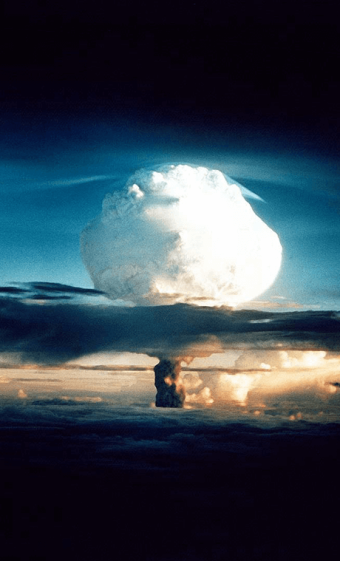
During the Second World War (1939-1945) the United States, Great Britain, France and their allies abroad made common cause with the Soviet Union in the fight against fascism. But with the defeat of Germany, Italy and Japan, the relationship between the capitalist west and the communist Soviet Union grew tense. This conflict between two rival political and economic systems was the decisive force shaping world politics between the late 1940s and the early 1990s. This war was “cold” only in the sense that the USSR and the west did not engage in direct armed conflict with one another. For countries in southeast Asia, Latin America and Africa, there was nothing “cold” about this conflict. The two opposing power blocs fought proxy wars with one another all over the world, using the political situations in other countries to extend their own power and influence while attempting to diminish that of their opponent. The Korean War was an example of such a conflict, as was the Contra War (the source of the Iran-Contra scandal of the 1980s) in Nicaragua. The Cold War ended in the early 1990s with the collapse of the Soviet Union.
In addition to the armed conflicts and extensive espionage that the United States and the Soviet Union engaged in around the world, there was an ideological component to the war that shaped the lives and experiences of millions of people, even those far remote from any physical violence. In the 1950s and 1960s, the threat of nuclear war and fear of communist infiltration led to paranoia and fear in the United States despite the fact that these were years of prosperity and economic growth. Even when the threat of nuclear destruction receded somewhat in the 1970s and 80s as a result of treaties between the US and the USSR, the world was still divided into two blocs. People saw the social, economic and environmental challenges of those years through the lens of this conflict, and this in turn shaped the decisions people made in many different areas, including science.
Photo Credit: National Nuclear Security Administration / Nevada Site Office, via Wikipedia. Public Domain.