
During the Cold War, Western scientists often emphasized the scientific freedom that they enjoyed in comparison to their colleagues behind the Iron Curtain. What was scientific freedom? When they used this term, scientists were typically describing what they saw as objective, unfiltered encounters with the natural world and the ability to work without having their research questions, observations or models forced to conform to specific political ideas — being able to direct their research as they saw fit and pursue the problems that they considered important. The scientists who articulated these ideas were doing so honestly, and what they were describing was worthy of respect, even if the reality often fell short. Many scientists during the Cold War, especially those doing research in the field of atomic energy, were subject to political persecution for suspected disloyalty; this could include being barred from professional organizations, losing funding or jobs, or being denied passports.
The reality was complex, in other words. As historian of science Audra Wolfe has pointed out, “scientists who successfully avoided these political landmines enjoyed a remarkable level of control over their own work during the Cold War.” But one of the reasons for this was that “US authorities understood the importance of drawing a contrast with the situation of science in the Soviet Union.” Scientists focused on their own research were not always willing or able to see that “their ideas were being put to use in campaigns over which they had no control.” That is, for the US government, American science was part of the battle against communism, in that scientists’ freedom to work as they saw fit — and the spectacular results, like the Green Revolution or the moon landing — were not just good for science, but were also a demonstration of the superiority of capitalism and democracy.
It’s not that the US government was wrong to draw connections between political freedom and scientific success, or that American scientists were mere tools of a propaganda machine. Despite the very real personal and professional consequences for suspected disloyalty, it was certainly the case that American scientists had far less to fear from their government than their Soviet colleagues if they failed to toe the appropriate political line. Rather, it’s important to keep in mind that the idea of scientific freedom during the Cold War was part of a larger political context that we need to be aware of when we think about scientific research during this period.
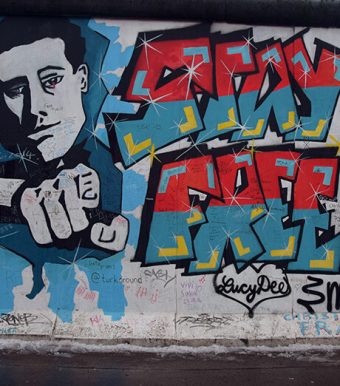
Photo Credit: Ank Kumar, CC BY-SA 4.0 , via Wikimedia Commons