Slideshow: The GMO Controversy Reaches Cold Spring Harbor
GM (genetically modified) plants have been a source of controversy for decades. The debate has affected even research institutions not directly involved in developing GM crops.
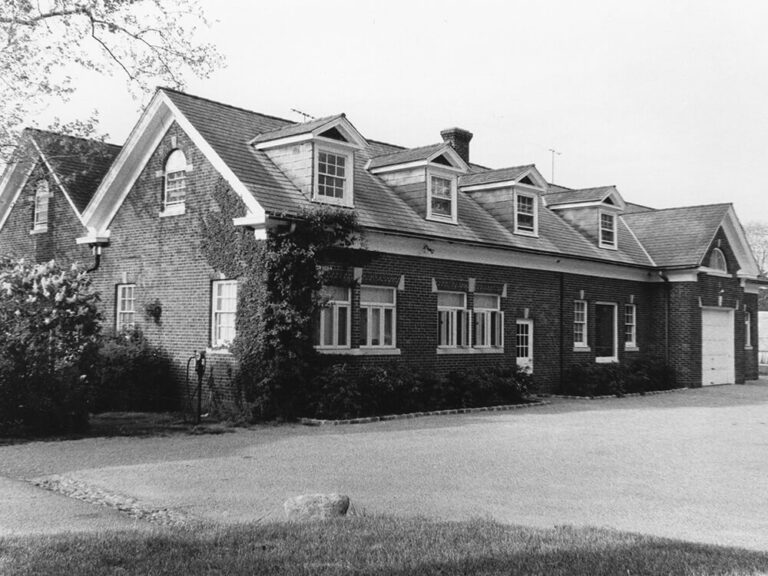
Cold Spring Harbor’s Uplands Farm facility was originally part of a dairy farm. Later, the land belonged to the Nature Conservancy. Cold Spring Harbor Laboratory purchased 12 acres of this land in the mid-1980s. This is the main building of the CSHL facility. It houses stock rooms, growth and storage areas and other research spaces. Photo courtesy of CSHL Archives.
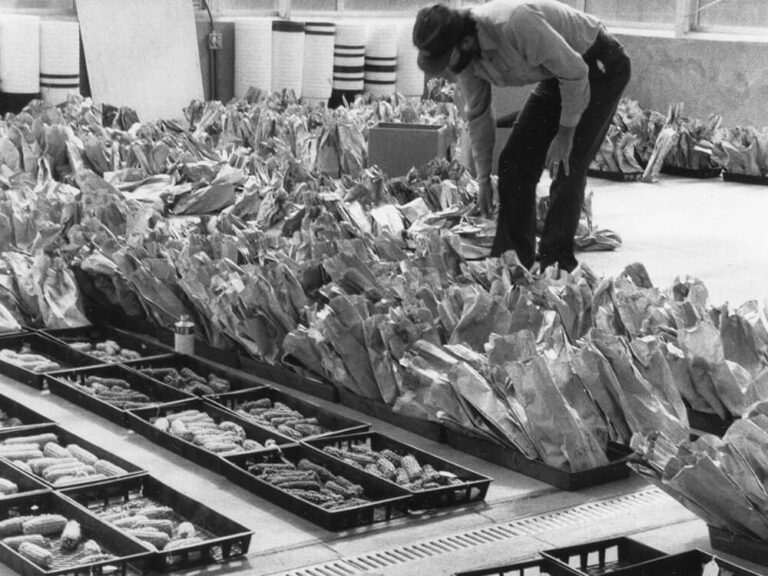
The interior of the largest of Uplands Farm’s three research greenhouses. Photo by Margot Bennett. Courtesy of CSHL Archives.
Researchers in the 1980s continued the work of CSHL biologist and Nobel Prize-winner Barbara McClintock, whose discoveries in corn genetics had revolutionized the field. Photo courtesy of CSHL Archives.
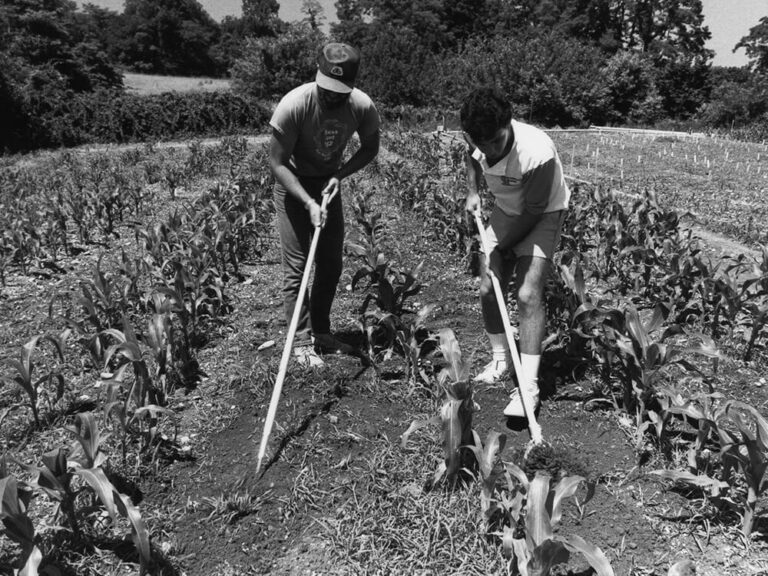
Plant genetics requires a lot of hard work. Photo courtesy of CSHL Archives.
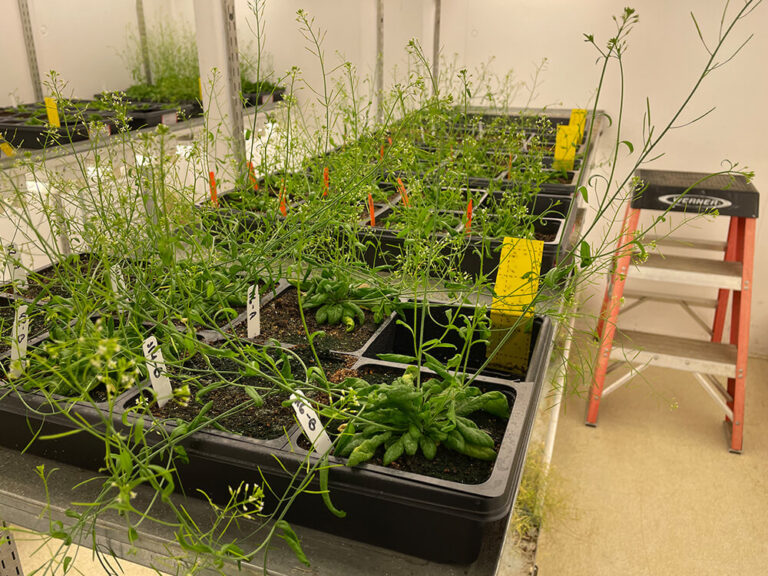
In addition to work on corn, scientists at Uplands Farm use other model organisms, such as Arabidopsis thaliana. This little roadside weed has provided decades of insights into the genetic systems of plants. Photo courtesy of CSHL Archives.
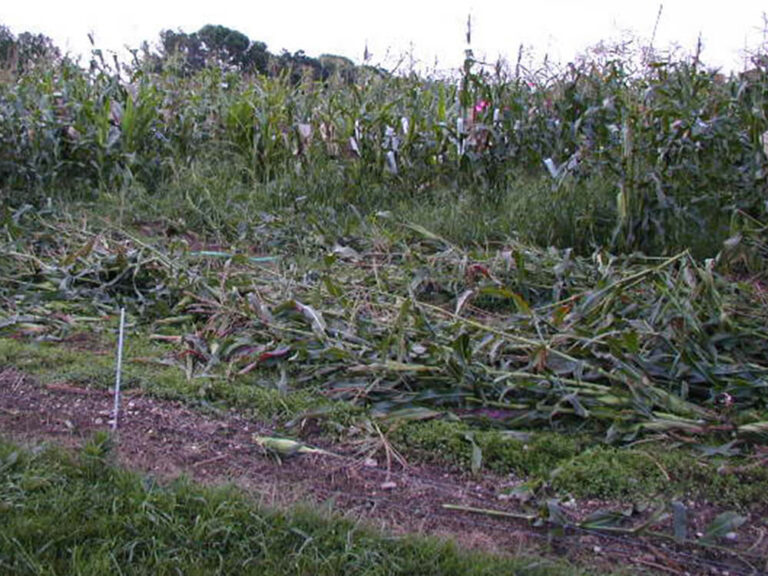
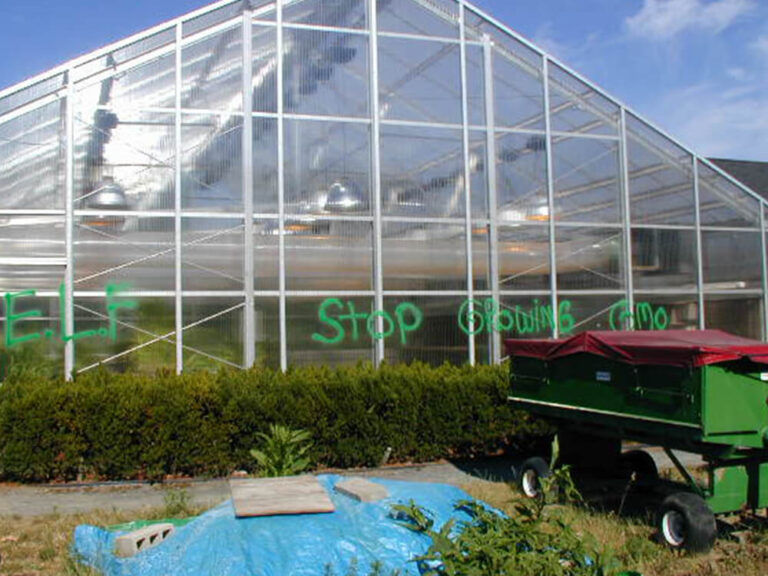
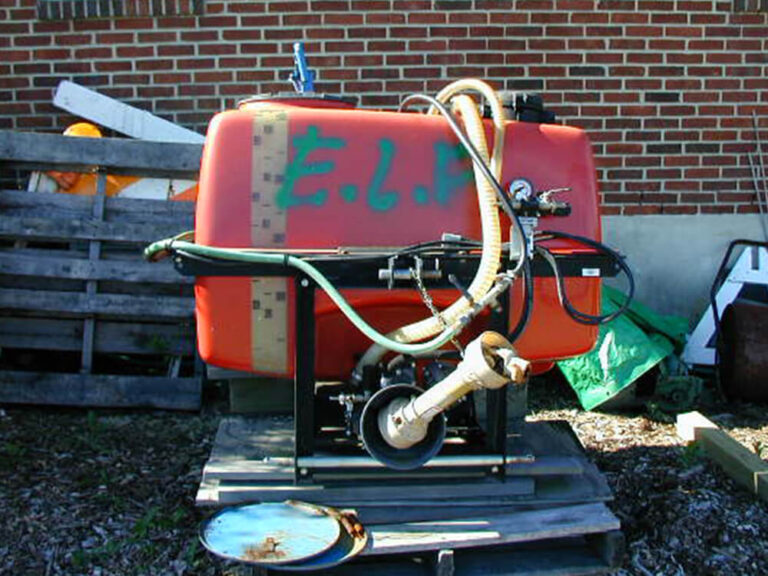
In the summer of 2000, activists claiming to represent the Earth Liberation Front (ELF) vandalized the cornfield at Uplands Farm. They believed, incorrectly, that the corn growing there was GM (genetically modified). Photo courtesy of CSHL Archives.
The corn that the activists trampled was not GM, but GM crops would not have been possible without decades of genetics research of the type that is in fact done at CSHL. Photo courtesy of CSHL Archives.
The line between technologies labeled as GMO and “conventional” modifications of plants and their genes is a policy line rather than a scientific one. Some conventional methods, such as tissue culture cloning, are very far from what many people would consider “natural” plant breeding methods. Humans have always modified the DNA of the plants we eat, and we continue to do so today. It’s up to all of us to inform ourselves about the technologies that go into our food and decide for ourselves which kinds of modifications we want to accept. Photo courtesy of CSHL Archives.
Plants need nitrogen to grow, but a significant portion of the nitrogen in fertilizers is not absorbed by the soil or used by the growing plants. Rather, it washes away into waterways, rivers, and the ocean. This in turn has had devastating effects on marine life. In some areas, excessive nitrogen in the oceans has caused algae blooms that kill wildlife, make it dangerous for people to consume fish or shellfish or in some cases even swim in affected waters. This problem isn’t limited to poorer countries. Nitrogen pollution is a serious problem here on Long Island. In our case, the nitrogen comes primarily from septic tanks and cesspools, although nitrogen from agricultural fertilizers also plays a role. Nitrogen pollution in the waters around Long Island has hampered fishing, made it dangerous to eat seafood from some areas, and caused environmental changes that make coastal areas more prone to flooding.